The opening angles are a measure of how directional the signal will be. Check Wikipedia for the high-level description. On that page on the right you see a 3D plot of a horn antenna (directional) and a dipole (omnidirectional in the horizontal plane).
The pattern of the 377 looks most like the horn antenna, where it is directional. The 80 degrees means that at those point in the pattern the signal is half of the peak. In below image the most signal will be in the top of the diagram; and the angle between the points where the graph show half of the signal strength (-3 dB) that is by definition the opening angle.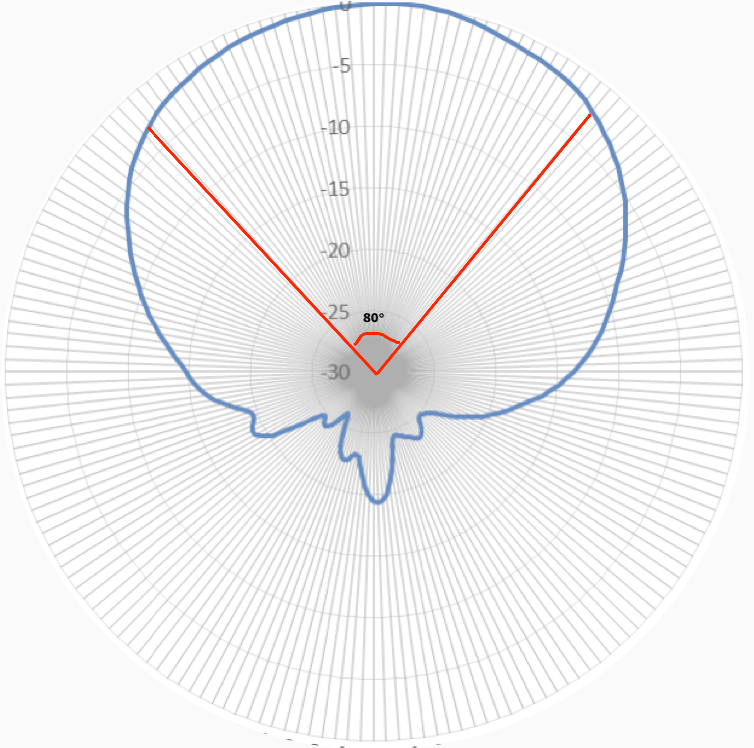
The smaller the angle, the more focused the signal is. In the focused area, the signal will be better than when there was no focus, outside it will be worse, it is just where you 'direct' the signal to.
If you now tilt this diagram clock-wise, you can imagine that you are watching it from the side (vertical plane) or top (horizontal plane):
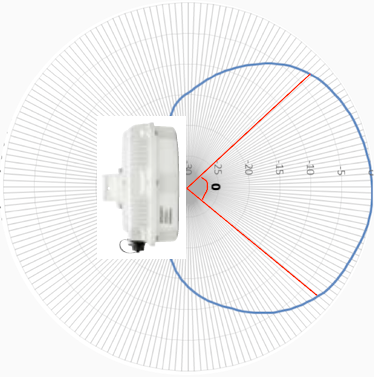
Note that you will have signal outside the opening angle, even below the AP and behind the AP, it's just not as strong as in the opening angle.
Antenna theory is part of most of the independent but also much of the vendor-specific wireless training and I would recommend taking training if you are designing the RF/Antenna part of the wireless network or consult an engineer who has this understanding.